

Rev. WonGong, Won Buddhist Dharma Teacher, Founder and Head Teacher of the Won Buddhism Temple in Chapel Hill, North Carolina, USA.
The recent flooding here in Chapel Hill, in Texas and elsewhere has been bringing our attention to the power of rain and water.
We extend our deepest condolences to those who tragically lost their lives in the recent flooding. This heartbreaking loss is a solemn reminder of how deeply our lives and nature are interconnected.
During the night of Tropical Storm Chantal, the car of one of our temple friends floated away, and the lower floor of her apartment complex was completely flooded. It is reported that a couple hundred people, many businesses and municipal buildings and vehicles in Chapel Hill and Carrboro area were severely affected by the floods.
Our temple garden was also heavily damaged. Bridges over the stream floated away, and a big maple tree near the creek was uprooted.
Over the past 20 years, we have been striving to make water flow smoothly through the creek in the temple garden. We placed many rocks and plants along its banks, hoping the banks would hold the water back. But the recent storm reminded us that nature has the final say!
When we built this dharma hall in 2011, the Carrboro Zoning Department required us to plan for storm water management based on the worst flood in the past 100 years. Following their guidelines, we created a bio pond next to our parking lot and a retention pond along the driveway. The bio pond alone cost us $50,000! During that process, I remember complaining about so much red tape.
At that time, it was easy for me to consider the town’s regulations as complicated, bureaucratic nuisances, but now I see the grace of laws that embody the foresight to prepare us for extreme weather events.
Through all the years since, whenever we have been drenched by heavy rains, like we were in the recent storm, I have deeply appreciated those little ponds saving us from greater flooding.
Thanks to the grace of fellow beings who guided us to install them…
Bows to storm water scientists, town hall staff, and site engineers…
With the recent storms, we have been reminded of the power of water. With awe and respect, we deeply contemplate the life-giving and life-destroying nature of water.
Water is indeed powerful, and it is also essential. Water is life—not only for human beings, but also for our temple garden and all living things.
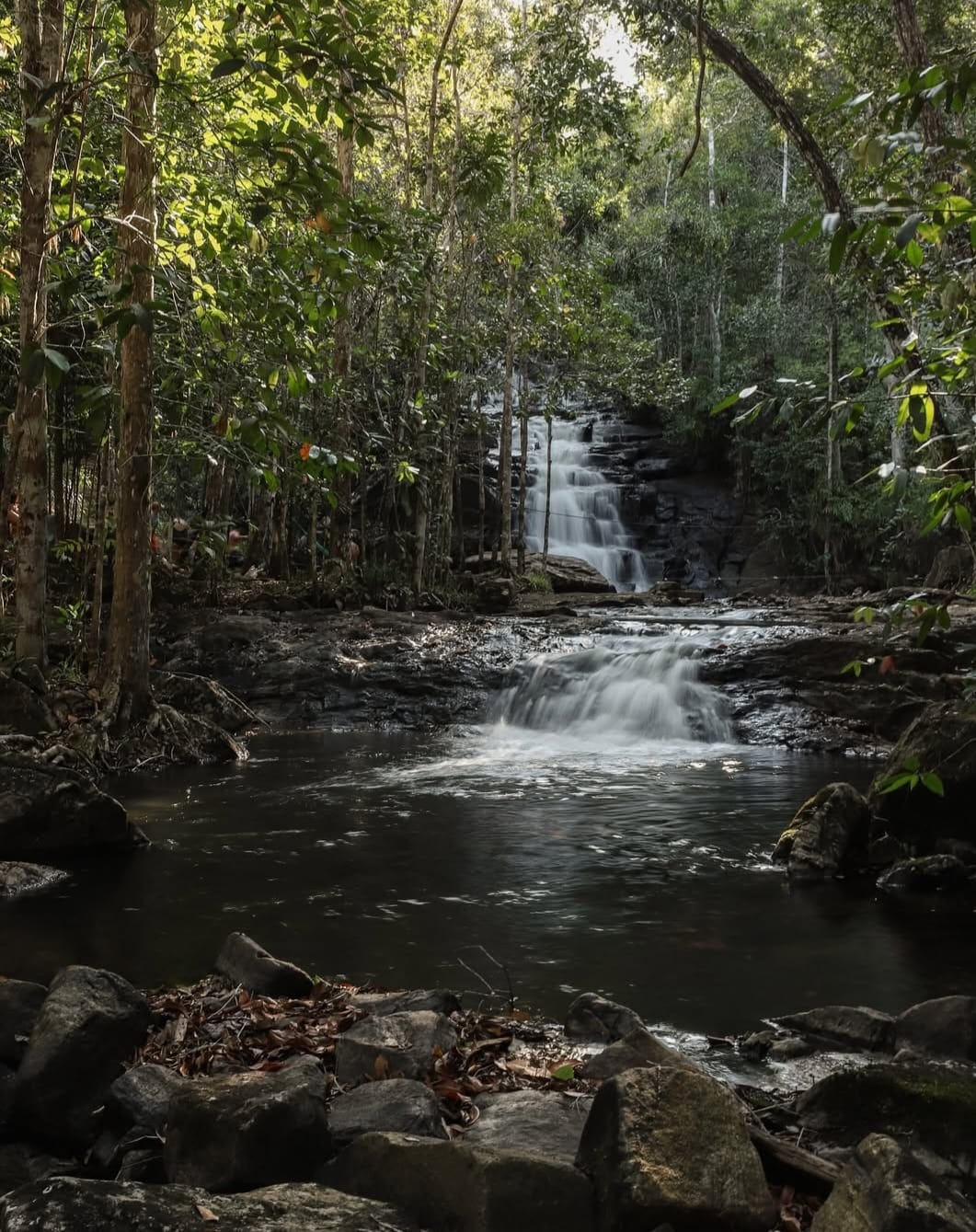
Flowing water in the temple garden always reminds me of the truth of interconnectedness. The water from our neighbor’s land becomes the water in our land. And that water goes to the land of other neighbors and to the community park. We are therefore all responsible for respecting the water and preserving the land together.
We all are aware that water does not hold any negative or positive characteristics; water itself is neither good nor bad. It just is. But as a force of nature, water embodies profound dharma teachings which are known as the Tao of Water in Asian culture.
In Won Buddhism, there are about 200 traditional songs, and each carries a dharma message. One of these songs speaks to the virtue of water. There are three verses. As I share the meaning of the lyrics, I will sing a little bit of each one.
물은 세상 만물을 기르면서도, 스스로 낮은곳에 흘러가나니,
섬기는 물의 덕 우리의 정신, 겸손하온 물의 덕 우리의 정신
The first verse of this song says: “Water nurtures all things in the world, yet it flows humbly to low places. We learn the virtue of humility from water.”
Water’s nature is to flow downhill. This is a simple observation—yet profound. The book, the Tao Te Ching, uses water as a powerful metaphor to express an ideal way of being.
Regarding the humility of water, it says: “The highest good is like water. Water gives life to ten thousand things but does not strive. All streams flow to the sea because it is lower than they are. The ocean symbolizes humility through service. By staying low, the ocean receives all streams. Humility gives the ocean its power.” < Chapter 8 & 66>
Recently, on our way back from the annual Kyomunims’ retreat in New York, we stopped at a temple friend’s home by the ocean. I was surprised to see how the land was so flat and low there. After the visit, while driving back to Chapel Hill, the land gradually became more hilly and higher in elevation.
I often forget the simple geographic fact that all of the water from Chapel Hill, Raleigh, and everywhere else will eventually flow down to the ocean.
By being low, the ocean receives all streams.
물은 본래 그 성질 부드러워도, 구슬져 방울방울 돌도 뚫나니,
꾸준한 물의 덕 우리의 정성, 끊임없는 물의 덕, 우리의 정성
The 2nd verse is about the power of water with its constant, persistent nature. To translate:
“Though water by nature is soft… drop-by-drop, it can penetrate even stone.
Let us model ourselves on the constant, persistent nature of water.”
Have you ever seen a hole in a huge rock made from water dripping on it for many years? Rocks can be eroded by the constant activity of water. Water inspires us to achieve the most difficult tasks, drop-by-drop, step-by-step. This song tells us that with our penetrating spirit, we invoke the power of unwavering dedication.
Chapter 78 in the Tao Te Ching says:
“Nothing is Softer than Water”
<To quote> “Nothing in the world is as soft and yielding as water. Yet for dissolving the hard and inflexible, nothing can surpass it.
The soft overcomes the hard;
the weak overcomes the strong.”
When was the last time you played with water? When we touch water, it is smooth and slippery on our skin. Water’s strength lies in its softness. Because it is soft, it is flexible. With its gentle and flexible nature, water flows around all obstacles.
물은 맑고 흐림을 두루합하여, 맑히며 여울지어 바다 이루니
합치는 물의 덕 우리의 단결, 국한없는 물의 덕 우리의 단결
Verse 3: “Water embraces clarity and cloudiness, both joining together to form the sea. May we emulate the unity of water by joining together in solidarity.”
This last verse expresses the harmony and unity of water. Regardless of being clear or murky—not polarized, water flows in unison to reach one great ocean.
When water collects, it develops great strength. When it is harnessed, it brings forth even greater good such as… that from water dams, irrigation systems, and hydro-electric plants.
Likewise, to reach the benefits of common ground, we must work together with collective strength and boundless cooperation. Regardless of our differences, when we aspire having a harmonious society, we create a place where all waters gather in one ocean. With the power of solidarity, we fellow beings can realize our potential to become a flowing force for beneficial change.
Let us remember that water is adaptable and yielding; it can flow gently and effortlessly, always onward; it nourishes all things without seeking recognition.
Finally, one more quote from the Tao Te Ching <Chapter 15 >:
Do you have the patience to wait
till your mud settles and the water is clear?
Can you remain unmoving
till the right action arises by itself?